
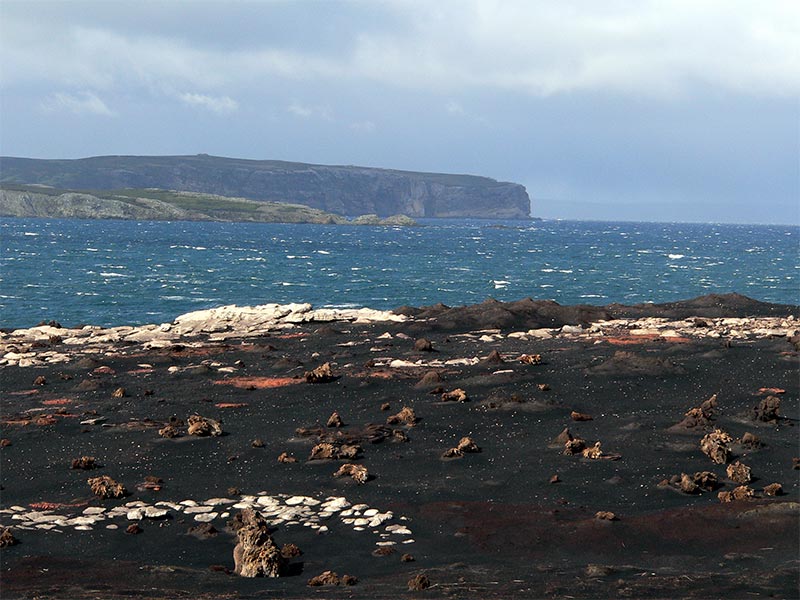
In 1985, British Armed Forces were on Bense Island for a training exercise and somehow started a fire (no one has admitted exactly how). The vegetation here is highly flammable, as is the peaty soil itself and unfortunately this fire burned for several months before it extinguished itself. This left about 20% of the island as a scorched-earth zone, devoid of all vegetation. With no plants’ roots to bind the soil, the strong subantarctic winds have had an easy job of picking up the dry, friable peat and moving it towards the eastern side of the island where it has accumulated in dunes, piled up against healthy tussock grass and smothering all shorter vegetation. The peat is like loose coffee grounds and moves so much it does not easily support new plant growth. In the worst affected areas, the peat dunes are over 1.5 m (5 feet) thick. Crucially, this has resulted in the death of plants that were otherwise unaffected by the fire, and ruined a lot of wildlife habitat. We watched the front of the peat deposit march eastwards in the early 2000s until it finally engulfed the area around our research hut in 2007. Since then it has been joined by some drifting sand, and the deposits have now moved out into Beazley Bay, where at low tide you can walk out and dig down through over 30 cm (1 foot) of peat before you reach the original sandy sea bottom. We hope to be able to revegetate the original burned zone with tussock grass and boxwood, and a small amount of natural regeneration has recently begun. When rabbits were present, they nibbled the fresh shoots of this new growth and natural revegetation was impossible. But now that Bense is rabbit-free, the plants have a chance to naturally spread back into the burned area.
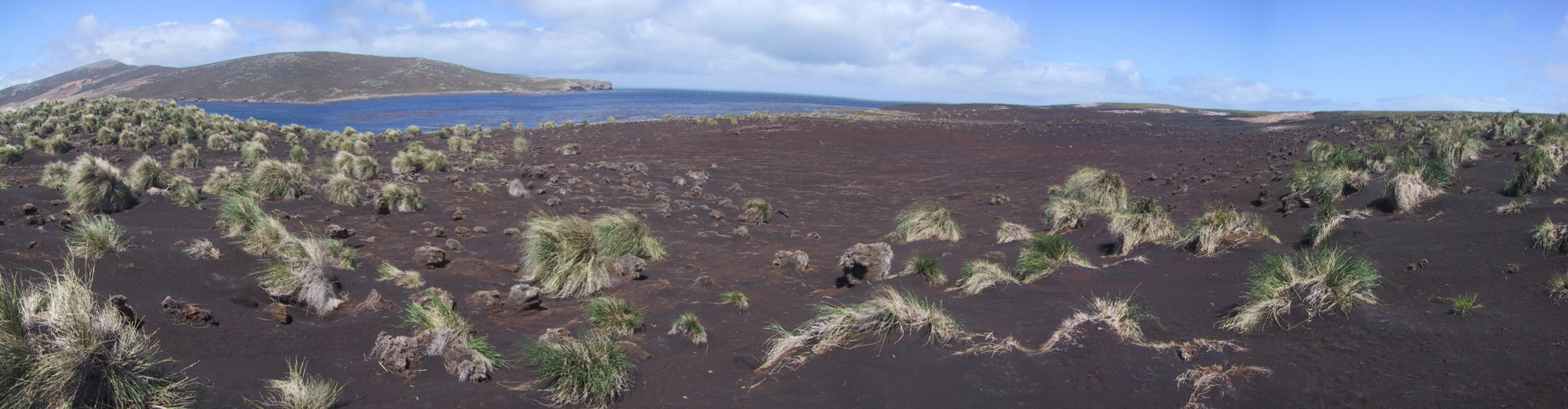
Peat dunes forming in the burned area, Bense Island.